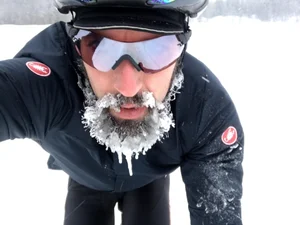
A New Functional Protection Paradigm
In August 2025, Castelli and Polartec announced AirCore, a weather-protection fabric built around an electrospun nanofibre membrane. Knowing new models were coming, I requested samples of three AirCore jackets - Perfetto RoS 3, Entrata 2, Alpha 150 - to test against benchmarks I know well: Perfetto Lite, Perfetto RoS 2, Alpha RoS 2, and the Unlimited Puffy. Below are early insights on the three new models. Short version: I wasn’t prepared for what these jackets represent. So far, I’m impressed.
Electrospinning, briefly
I hadn’t planned to go deep on the engineering, but electrospinning matters. It’s a process that creates a porous membrane from nanofibres 70–100× thinner than a human hair. The membrane isn’t woven; it builds up as fibres are deposited onto a target; think a nano-scale ‘spray’ that forms a controlled web.
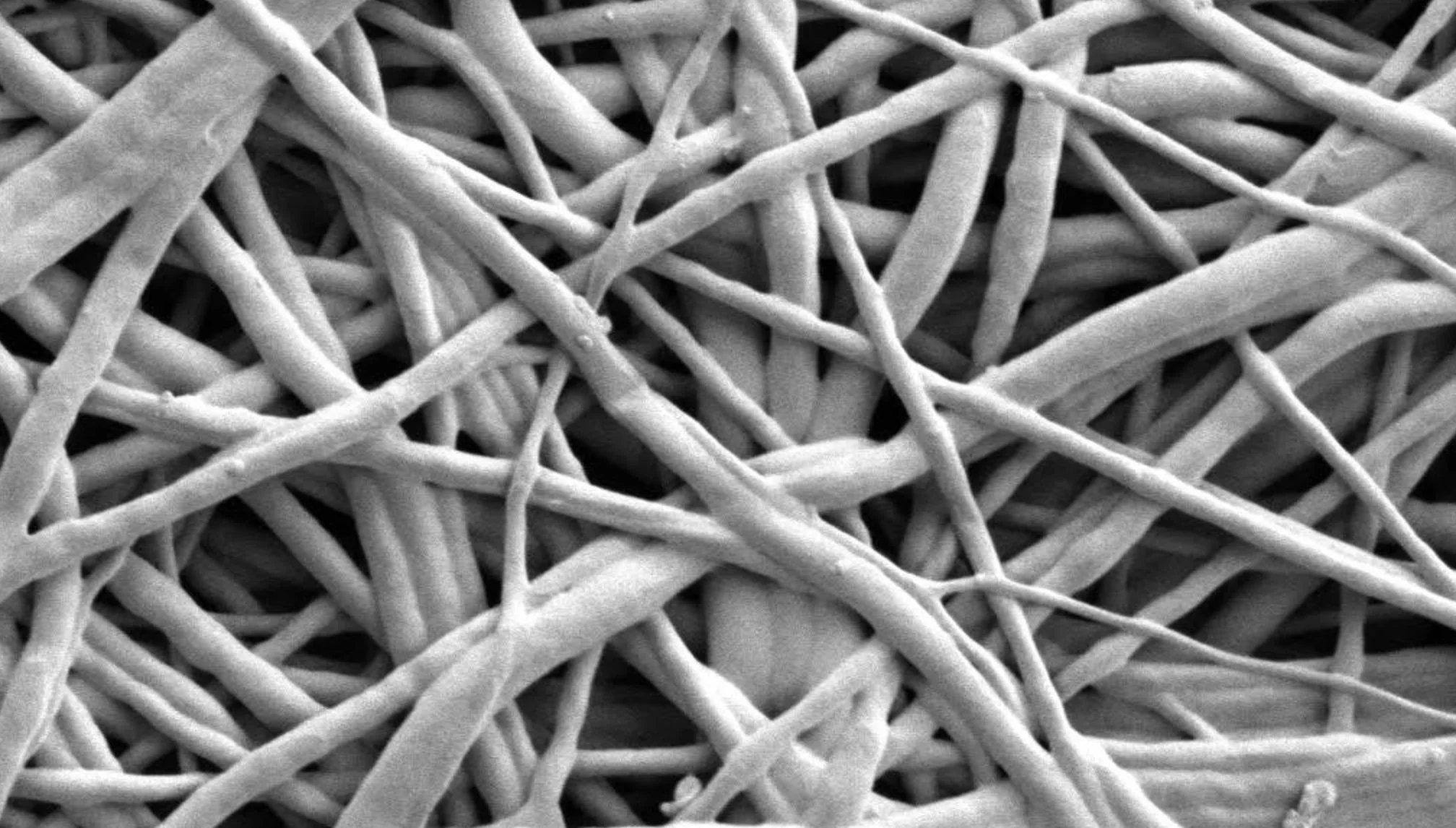
Castelli shared this microscopic image of AirCore’s electrospun nanofibre membrane structure.
Electrospinning lets engineers tune porosity and thickness to target performance - stretch, airflow, and vapour transport - rather than accepting a fixed barrier. The deposited layers of nanofirbres combine to create a convoluted path for air flowing on the membrane, essentially stopping wind while still allowing a small amount of air to permeate the membrane.
In common language, AirCore is still a three-layer laminate that blocks wind and rain; many laminates do. The difference is that this composition enables Castelli to reframe the design problem.
Problem (re)definition: Resistance to Regulation
Instead of chasing the usual goal - make a fabric waterproof, windproof, and breathable - AirCore starts with a different question: How can a fabric help maintain equilibrium by managing energy and moisture transfer in motion, rather than simply resisting them?
This is the shift Steve Smith, Castelli’s Brand Manager, took to Polartec’s R&D team (the full story is worth hearing on their podcast). For decades, riders have been conditioned to equate protection with total resistance: seal out the air, seal out the water. But equilibrium depends on exchange. Resistance isn’t futile; it’s contextual. The right garment doesn’t isolate the rider; it enables a measured conversation between body, fabric, and environment.
AirCore marks the start of that conversation, and an opportunity to re-learn how to dress for protection. As one of Castelli’s Canadian brand ambassadors, I’m using early access to generate practical field data and share insights that complement Castelli’s product information. I ride in all conditions, across multiple road and off-road disciplines, year-round, spanning more than 30 years in Eastern Canada. What follows is not a repost of marketing assets; it’s a report on how these pieces behave in real conditions.
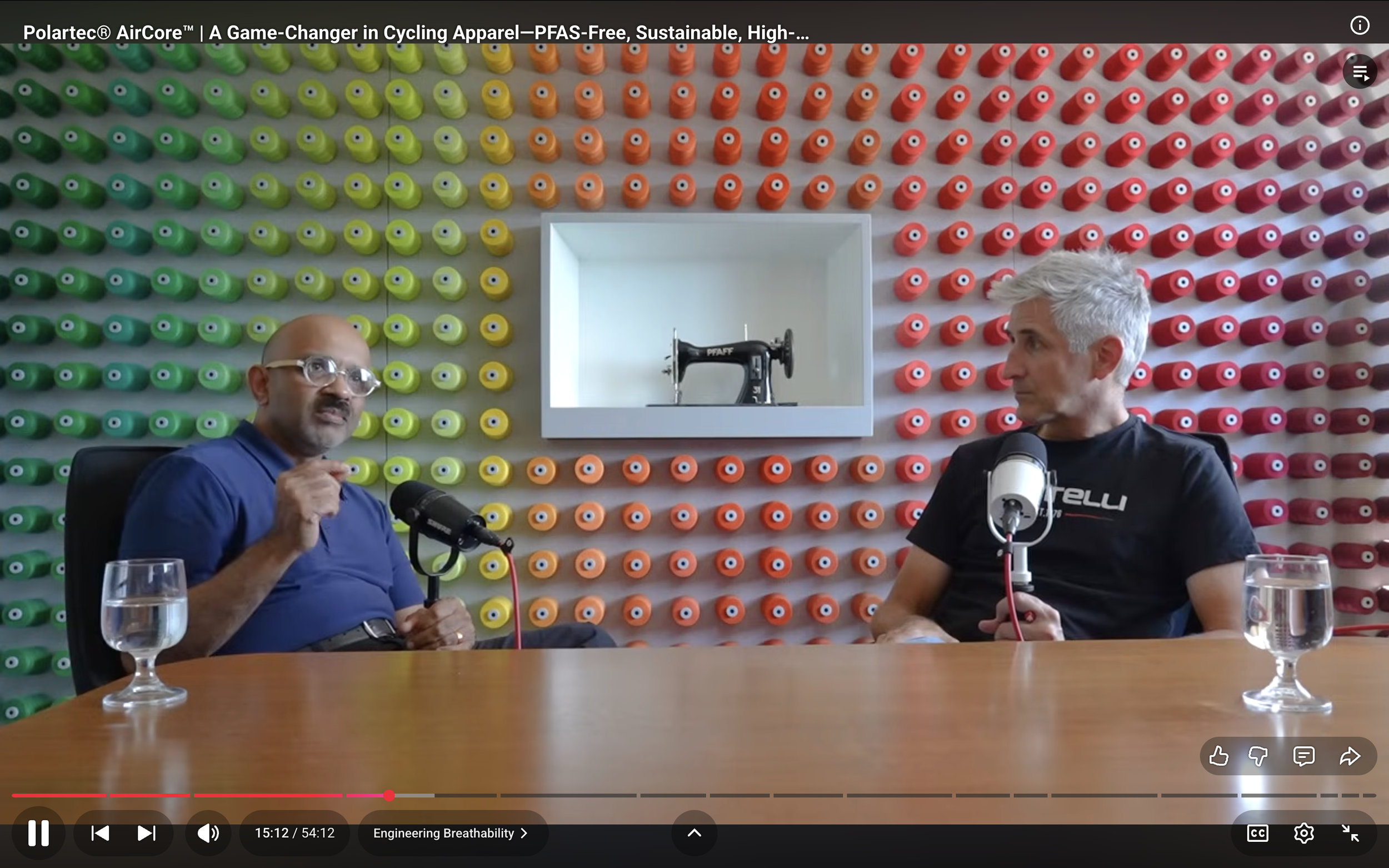
Link to podcast video here
Fear Understanding
In a 2025 piece on sleep systems and the synthetic / down insulation dichotomy, I examine how and why many outdoor enthusiasts adopt a ‘pack your fears’ mentality, buying or carrying gear in response to anxiety rather than need. The outdoor industry amplifies this behaviour through a well-established marketing tactic: fear-appeal advertising. Evoking negative emotion - fear, anxiety, even anger - is an effective way to inspire people to act. By ‘act’ I mean, ‘purchase’.
The primal basis
Brands don’t need to manufacture fear; it’s already present. Humans instinctively fear exposure and cold. The promise of ‘100 % wind- and waterproof”’gear speaks directly to our primal need for safety, especially since most people don’t fully understand how or why we get cold - or stay warm - during outdoor activity. If feeling wind or getting wet are treated as inherently bad, can any brand realistically persuade consumers to choose 'water resistant’ or ‘wind resistant’ gear for general use?
The answer, at the mass-consumer level, is no, and the reason lies in nuance: the difference between low-effort exposure and high-effort equilibrium.
How you move matters
Imagine two riders facing identical conditions: 12 °C and moderate rain. One is on a motorized quad; the other is climbing a 12% grade on a bike. Both need protection to stay warm, yet their jacket requirements differ completely. Maintaining equilibrium in each case involves balancing heat output from the body with the transfer of that heat through clothing to the surrounding air.
Low-effort scenario (the quad):
Physiological work is low, heat production minimal. Wind strips warmth from the body’s surface, and because wet surfaces conduct heat faster, a simple impermeable shell - a ‘garbage-bag’ jacket - makes sense. For fishing or other low-output activities, trapping heat matters more than releasing it.High-effort scenario (the climb):
The cyclist’s body is a furnace, expelling hundreds of watts of energy. Inside a sealed jacket, that heat rapidly condenses into moisture, saturating layers and accelerating cooling as soon as effort drops. Too much protection causes the very cold the rider is trying to avoid.
Managing what is (actually) critical
Think of a space station: ambient temperature in outside is near absolute zero, making internal humidity control a critical safety issue. The presence of water destroys thermal efficiency. Similarly, for a cyclist, the critical performance metric isn’t waterproofness, but vapour transport / breathability: the ideal cycling jacket must actively transport water vapour (sweat) out of the system before it can condense into liquid.
Returning to packing our fears, substituting jacket for sleeping bag reveals the same patterns of over-protection:
Overbuying temperature rating: people who fear being cold often choose a bag/quilt jacket rated far below the coldest conditions they’ll actually face — sometimes 10–20°C colder.
Ignoring system balance: sole focus on bag warmth, jacket wind and waterproofness, overlooking pad ride intensity dynamics, shelter placement route exposure to wind, and layering.
Packing extra ‘just in case’ gear: heavy liners layers, secondary blankets jackets.
Whether in sleep systems or cycling apparel, the challenge is the same: equilibrium requires trust - in design, in materials, and in our own ability to manage exposure intelligently. The breathe-first mindset replaces fear with understanding. Armed. with facts, information, and insight on the state of the art, we’re on our way; super! How we size our jackets still matters though; let’s get into that.
Physics, Fit, & Sizing
At a technical level, fit is more than appearance and aerodynamic performance; it directly affects a jacket’s ability to manage airflow, vapour transport, and your system’s internal dew-point zone. The volume of air between your skin and the outer surface determines how moisture behaves. A small amount of loft between layers can hold warm vapour long enough for it to remain gaseous and migrate through the membrane. If the outer surface cools below that dew point, or if the fit creates excess internal volume, vapour condenses into liquid water, saturating layers instead of escaping.
The closer the garment can stay to the body, the better the system can regulate exchange between heat and ambient air. Too much space, and the jacket becomes a trap; too tight, and breathability pathways collapse.
Baseline: At 185 cm / 6’ 1”, long torso, 80 kg / 175-180 lb, my general size in Castelli jackets is LARGE. While I also fit some MEDIUM cuts, XL is always far too big. Sizing is always complex, which is why I receive more questions about it than anything else.
My baseline and benchmark jacket is the Perfetto RoS 2, which I have in MEDIUM and LARGE. Infinium is not a very stretchy fabric, so the MEDIUM is reserved for use over a short or long-sleeve base layer. To-date, this is my best performing jacket for winter fatbiking on technical and demanding trails; I wear LARGE for that, which has enough space inside to accommodate my water reservoir (worn inside to keep water from freezing). This RoS 2 has more chest room than I need, and its sleeves are longer than I need too. Torso length is about 1/2” longer than the MEDIUM.
AirCore and Ristretto (introduced 2024) jackets replace Castelli’s prior range of pieces build with Gore-Tex Infinium membranes. My focus here is 3 of the new AirCore jackets:
Perfetto RoS 2 (312 g) -> Perfetto RoS 3 (241 g): 150 gsm AirCore membrane
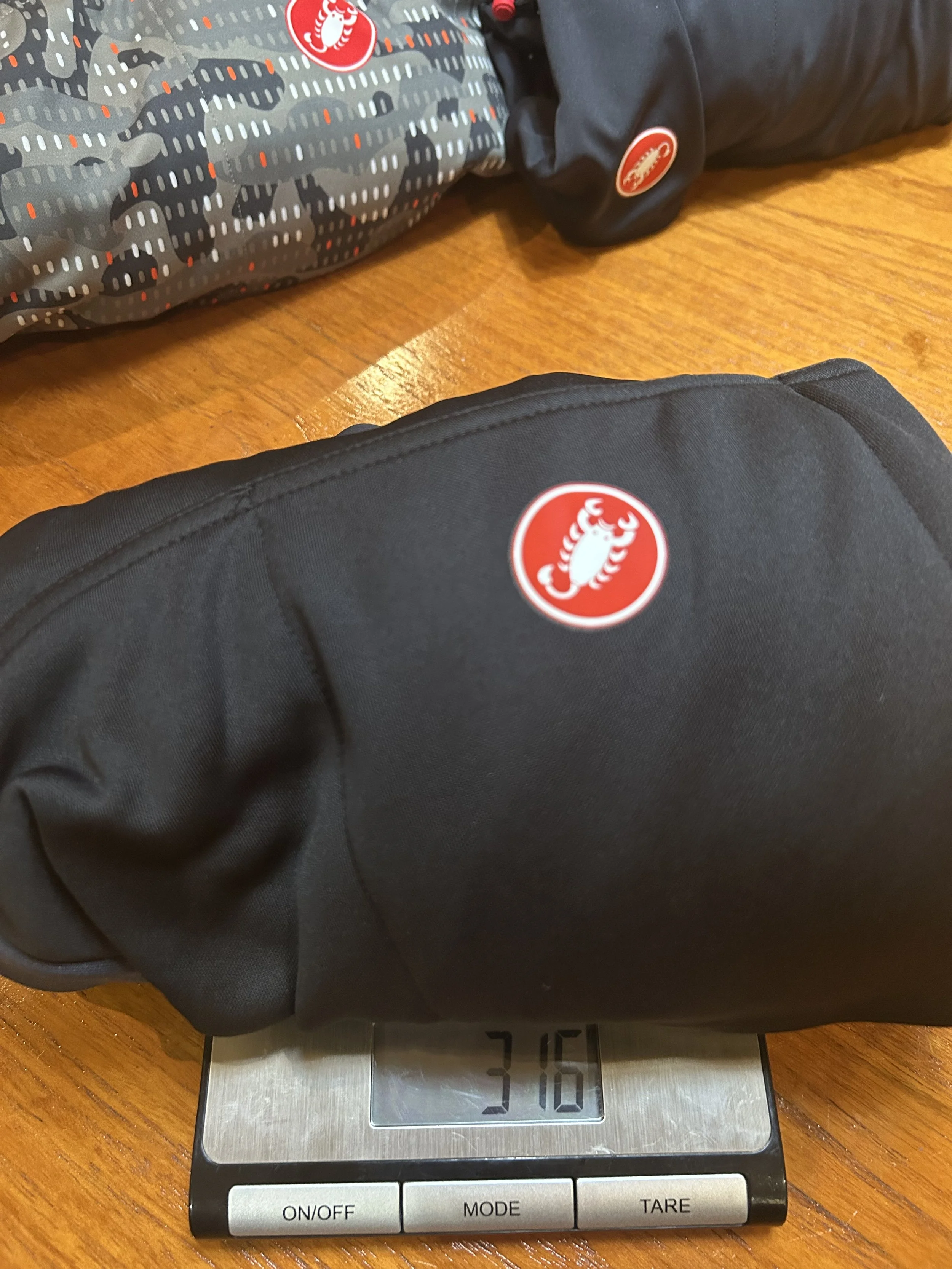
Entrata -> Entrata 2 (316 g): 298 gsm AirCore + Polartec fleece insulation
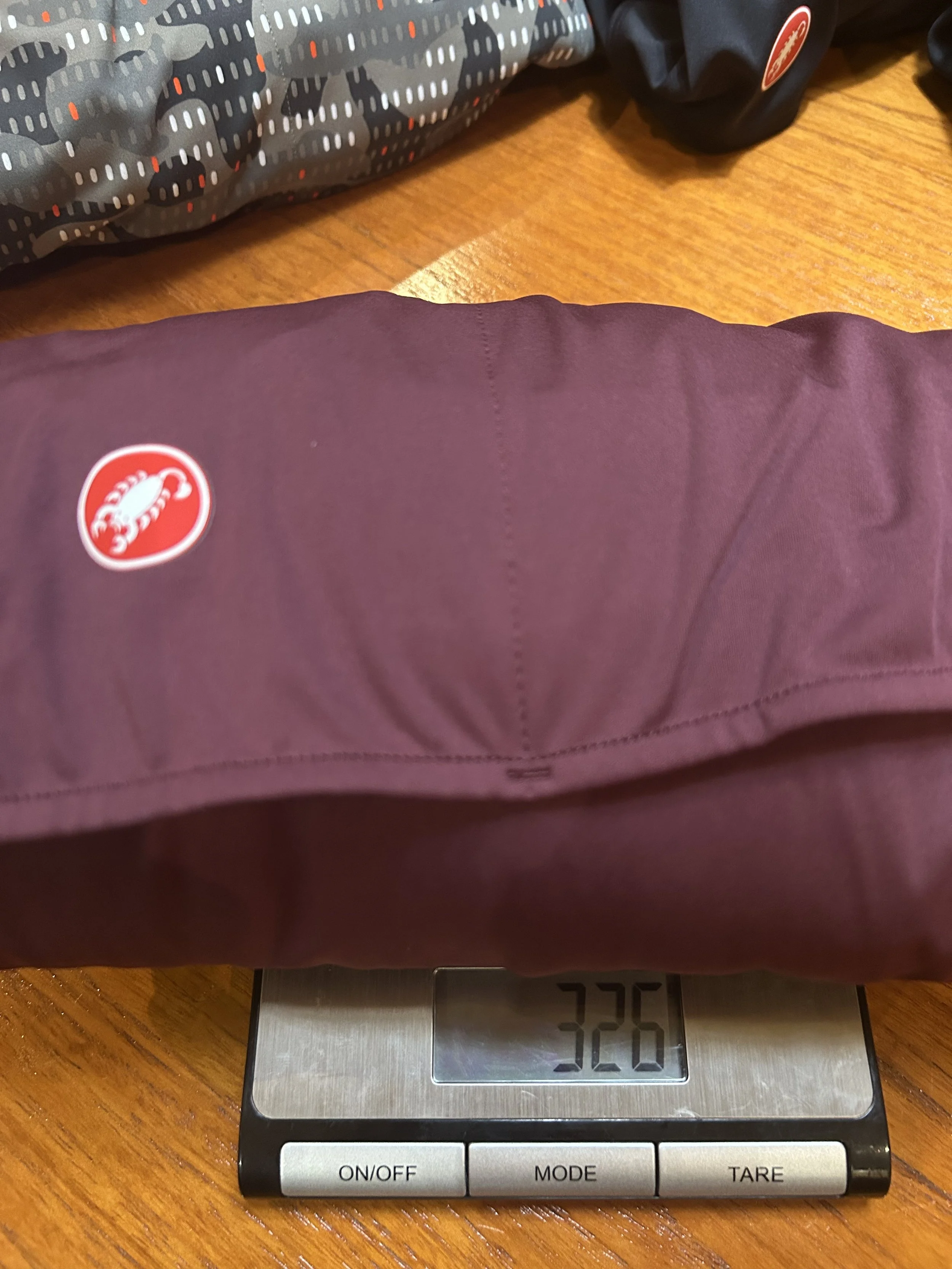
Alpha RoS 2 -> Alpha 150 (326 g): 150 gsm AirCore + Alpha Direct insulation
Some will wonder whether AirCore will work best skin tight? No, but there is going to be a learning curve - see my first impressions below for early insights.
For now, my recommendation is to fit your jacket snug, not tight.
For the Perfetto RoS 3, I highly recommend a fit that allows for use of the Cold Days Alpha Direct base layer underneath without tight compression of the insulation’s structure for….cold days. I anticipate that combination will be good for high intensity down to -5C or colder; I need to test once weather allows.

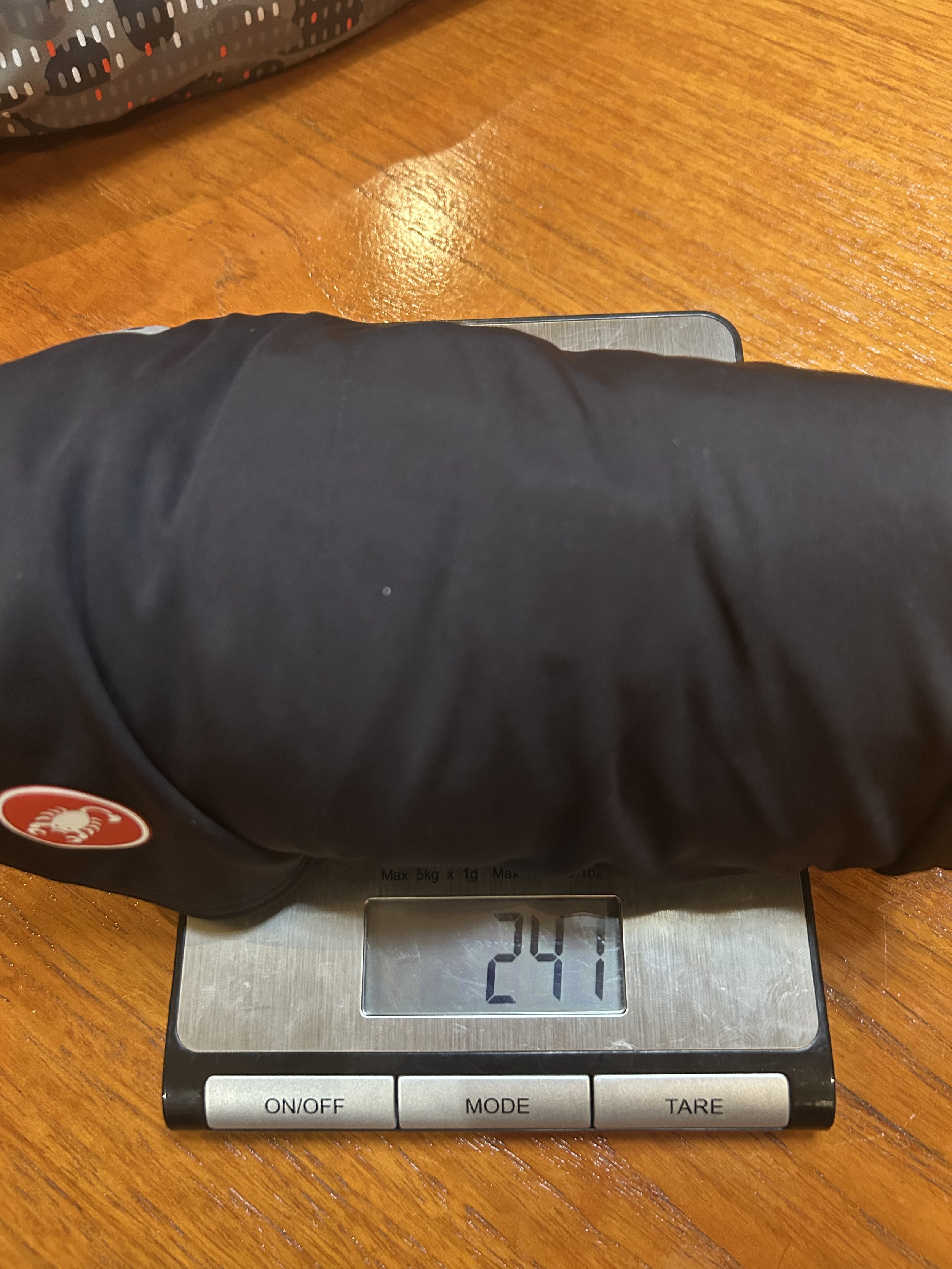
Perfetto RoS 3
This jacket (second from left above) is made from the 150g AirCore membrane fabric only; there is no lining or insulation, and the new fabric is, as intended, far stretchier than Infinium, lighter, and less voluminous. Abdomen zipper vents are retained more for continuity with the prior iteration than out of necessity. At a system level, these are the key implications to consider:
RoS 3 sizing is not identical to RoS 2. My LARGE 3 seems to be in between my MEDIUM and LARGE RoS 2s; this is perfect for me. The tail extends significantly lower than the RoS 2.
More stretchy fabric should allow you to fit more snug than necessary for RoS 2s.
RoS 2 was not a flappy fabric, AirCore is not flappy; if you go with a more accommodating size you won’t pay a heavy aerodynamics penalty.
If I wanted a RACE fit, I would do a MEDIUM. I want a GENERAL fit, and the LARGE is ideal for that.
The RoS 3 is significantly lower volume and weight than the Ros 2. By weight, it’s 25% lighter, and it rolls up small enough small enough to fit into a jersey pocket. This was not feasible with the RoS 2.
The more stretchy a jacket is, the more ‘normal’ it will feel when standing up. My RoS 3 feels comfortable while standing.
Entrata 2
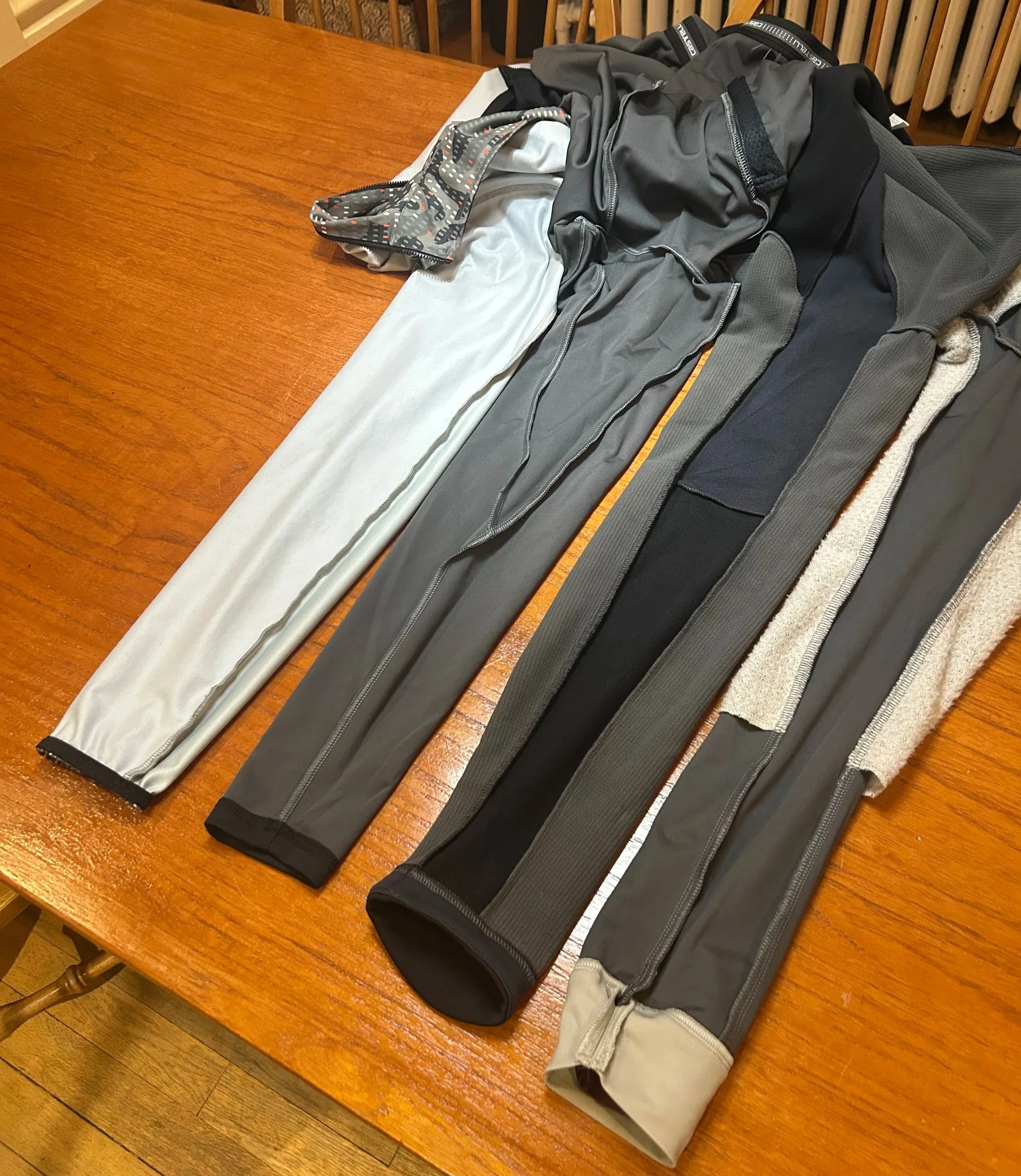
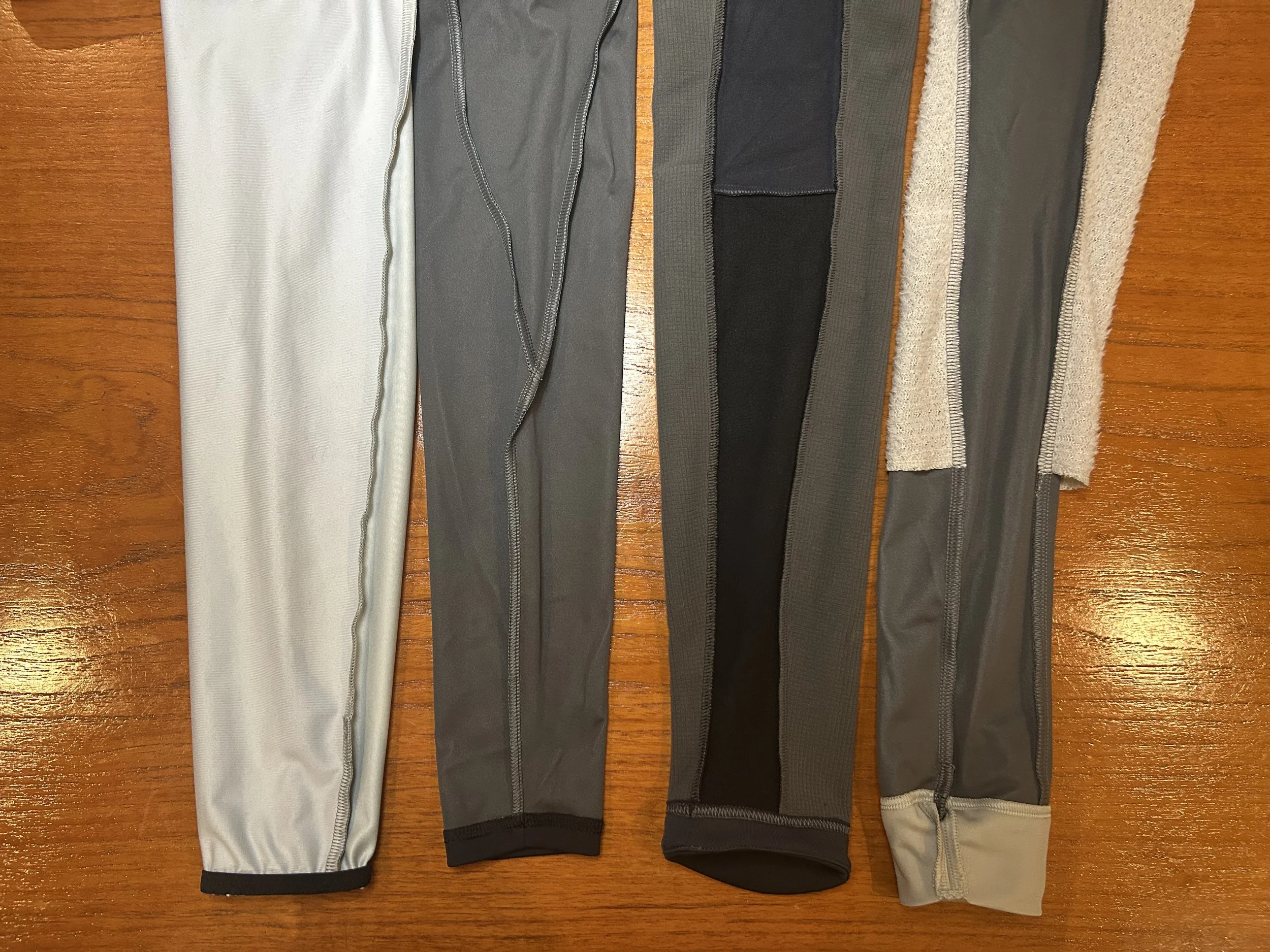
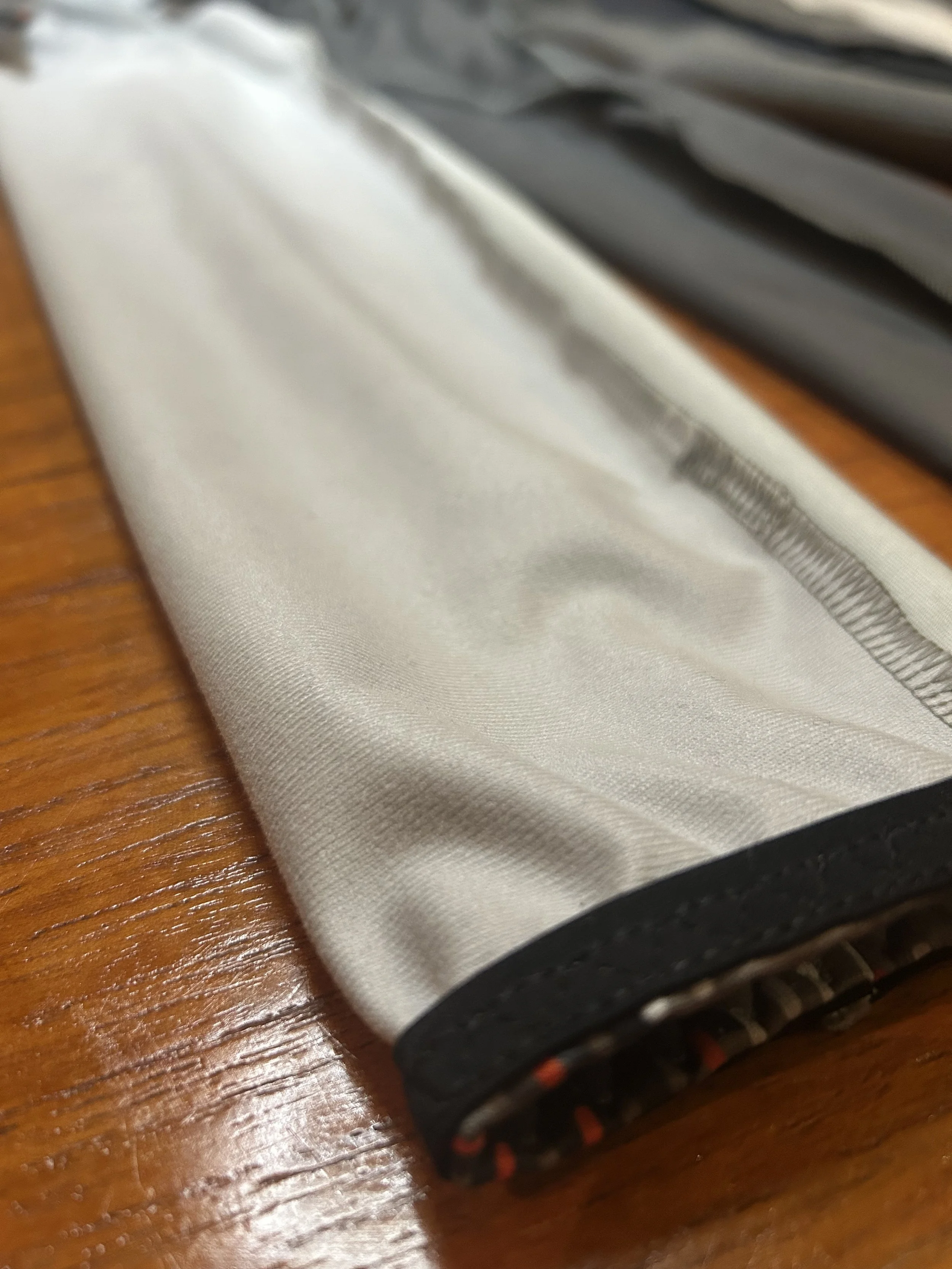
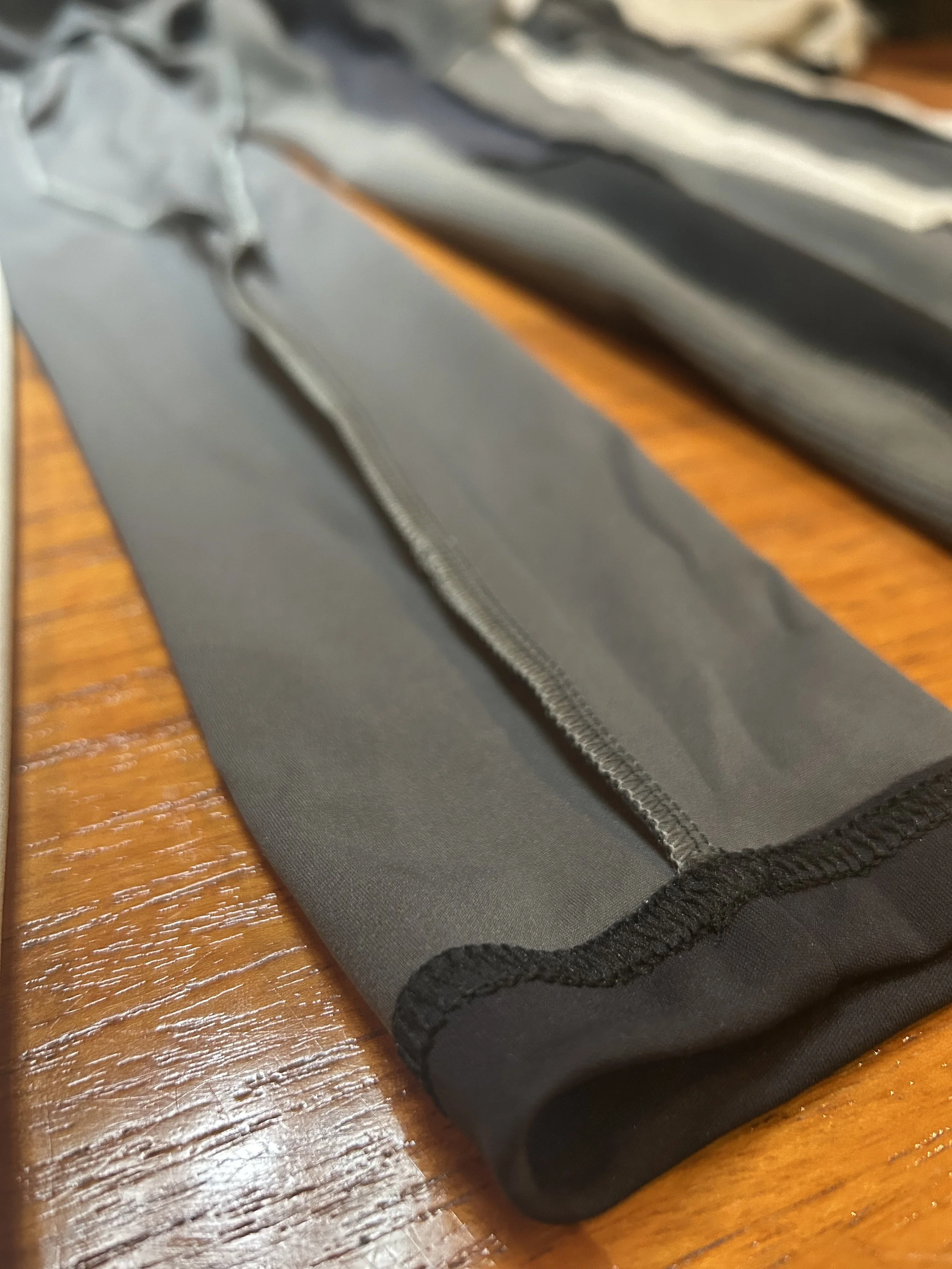
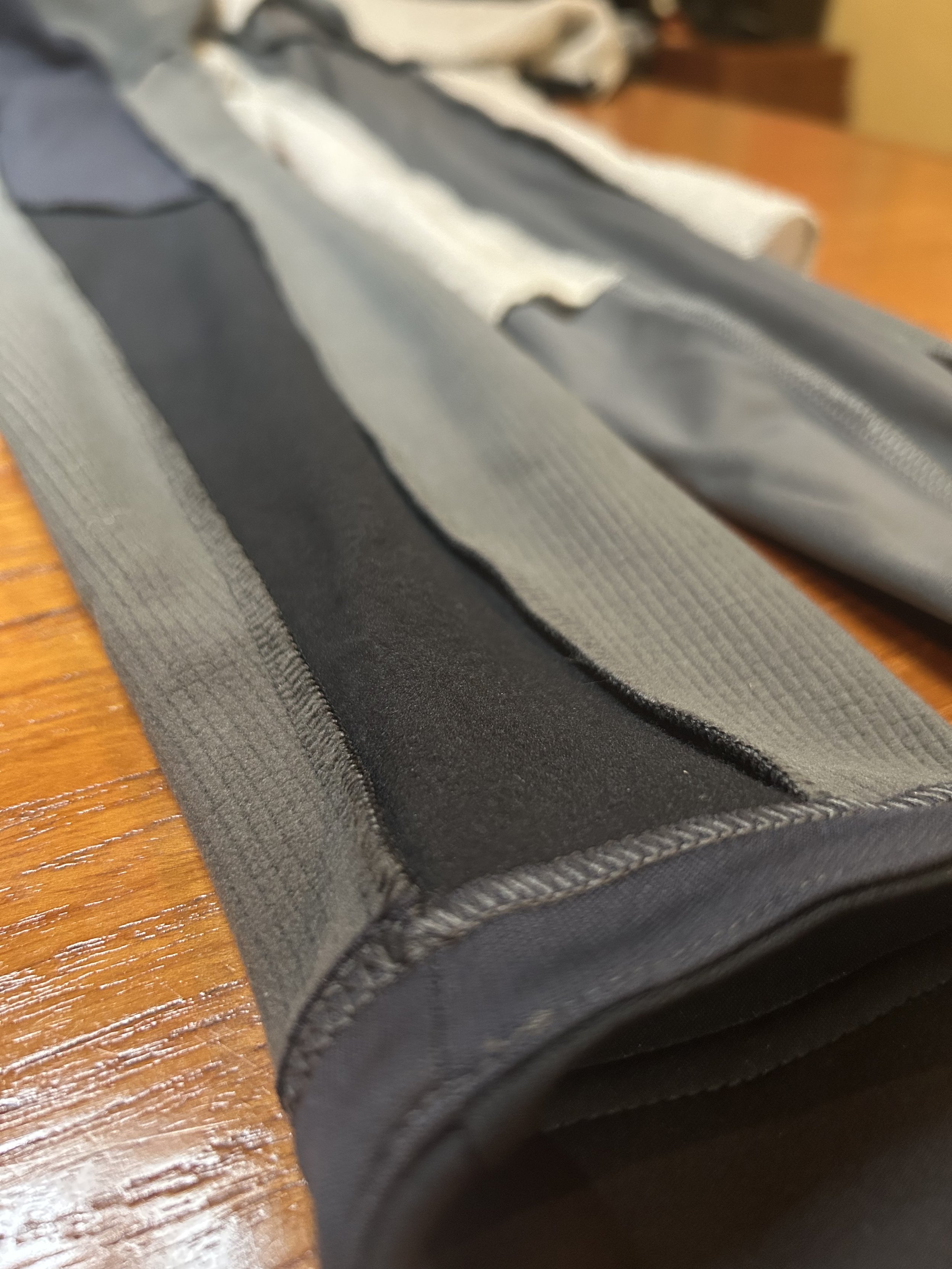
Like the Perfetto update, Castelli has implemented AirCore in the place of Infinium for the new Entrata; the unique thing here is that AirCore fabric is almost double the thickness/weight of the other two models: 298 gsm (the Competizione model also uses 298 g AirCore). In addition, three Polartec fleece fabrics are used for insulation, including a structured fleece: Polartec Powergrid. I say ‘structured, because the insulation’s surface is comprised of a raised grid / relief channels. This is the gray fleece in the image below. The black fleece on the underside of the sleeves and armpits is a lighter weight than the dark gray fleece that runs over the shoulders. As you can see from my images, the jacket’s construction is far more complicated than you might imagine from looking at the exterior. If you want to understand how a jacket is likely to function, you need to turn it inside out and assess what it’s made from.
Unlike the Alpha 150, the Entrata 2’s fleece insulation is bonded to the 298g AirCore fabric. This means that while the 298g AirCore’s stretchiness might be impressive, it can only stretch as much as the fleece it’s bonded to, and fleece isn’t meant to be very stretchy. This coherent layered structure also means the garment is not prone to flapping in the wind, which is a positive.
I don’t have a baseline Entrata; I ordered a LARGE. Cut is very similar to the Alpha 150, which makes sense because the Entrata 2 is not particularly stretchy; think of a densely knit long-sleeve jersey. I’m fairly certain I could wear a MEDIUM comfortably, but am happy to have the LARGE so I can find out how cold the jacket can comfortably go under high intensity.
When putting the jacket on, the armpits feel constrictive; this is not uncommon with well-cut jackets. In the riding posture this sensation doesn’t occur. This is a reminder that you should not size your jackets based on standing around in them. Get onto a bike and see how they feel with your arms at 90-degrees from your torso.
The jacket’s arms seem longer than the other two models, even though the actual difference is probably minimal. This is more likely down to the fabric’s tendency to lie flatter on the arm than the other two, which can more freely wrinkle. By no means is this sleeve length a complaint; as you add layers within the sleeves will pull up, and their length will allow for complete external overlap with gloves, which is particularly important while riding in rain and snow.
The tail is cut ‘normal’, like the Alpha 150.
Alpha 150
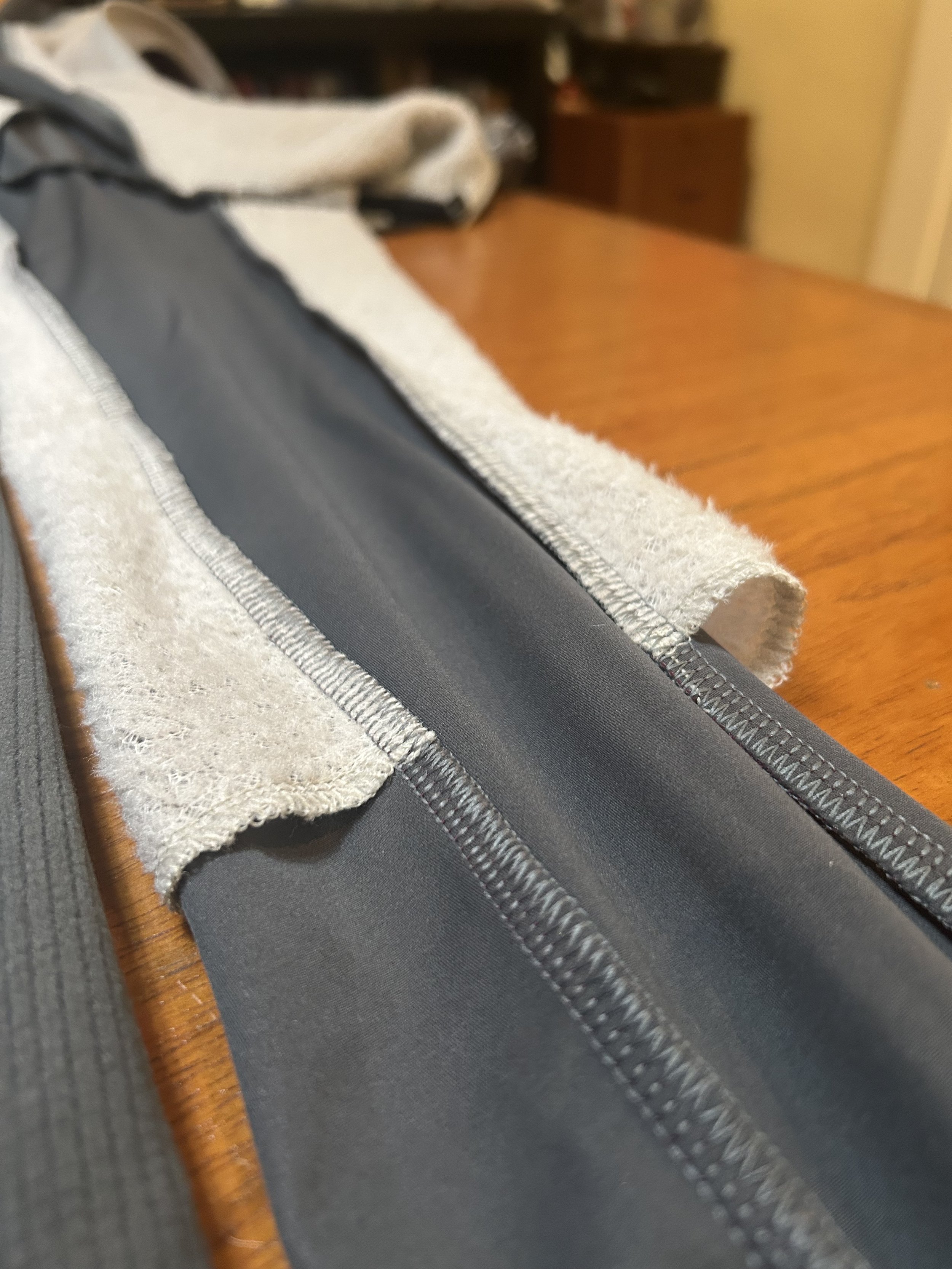
A significant reboot on the very warm Alpha RoS 2, the Alpha 150 unlocks the massive insulating and vapour management Polartec’s Alpha insulation offers (see here for more on this fabric in the context of sleep systems). As I discussed in detail here, Alpha insulation moves so much vapour it requires pairing with a wind-protection layer / shell fabric that can match this rate. The Unlimited Puffy’s shell fabric can’t clear vapour fast enough at winter fatbike speeds, so vapour condenses and turns to ice.
To my eye, the Alpha 150 represents the state of the art, combining Alpha Direct insulation (60-90 gsm, TBC) with 150g AirCore. For reference, the Alpha RoS 2 was very good for moderate intensity / high wind exposure riding (like 200km winter solstice rides), but can’t handle vapour management on the fatbike, even down around -15 C.
Alpha 150 sizing is quite similar to Alpha RoS 2 sizing, which is likely down to the fact that Alpha insulation isn’t very stretchy. Even though the AirCore 150 g shell is stretchy, the Alpha Direct inside isn’t, so the jacket has to be cut a little roomier than the Perfetto RoS 3.
I wear LARGE in the Alpha RoS 2, LARGE in the Alpha 150. The 150 is roomy enough to accommodate as much layering as I’ll ever want - not more than 2 full-sleeve base layers, for low intensity riding, very cold (down to -15 C) - including my hydration reservoir. I could also fit a MEDIUM; I’d choose that size if I rode mountains in the winter with lows generally not colder than 0 C.
The tail is ‘normal length’, as this jacket is more intended for dry cold than wet cold.

Layering
AirCore pieces are tuned for minimalist layering. I’ve tested Castelli’s Pro Mesh SS and Prosecco long-sleeve base (current model is ‘Core’) layers with the Perfetto RoS 3, merino t-shirts with the Entrata 2 and Alpha 150. Adding too much bulk inside these jackets compromises the airflow that makes their membranes effective.
As the time of writing (end of October) my home region has had the driest, warmest weather in my lifetime. I’ve seized every opportunity to test the new jackets, which has been more upper-limit-breathability-centred than lower-limit-warmth-centred.
As you can see in my table (and Strava post), I pushed the Perfetto RoS 3 at 19 C, a temperature the RoS 2 would always get clammy in and overheat. The RoS 3 was stable at my mellow intensity, and actually felt unique: a faint cooling sensation, like silk, moved across my forearms as I passed through the air. It wasn’t a draft; it was micro-scale airflow. I assume this gentle air exchange was occurring across the front of the jacket too, but I couldn’t perceive it.
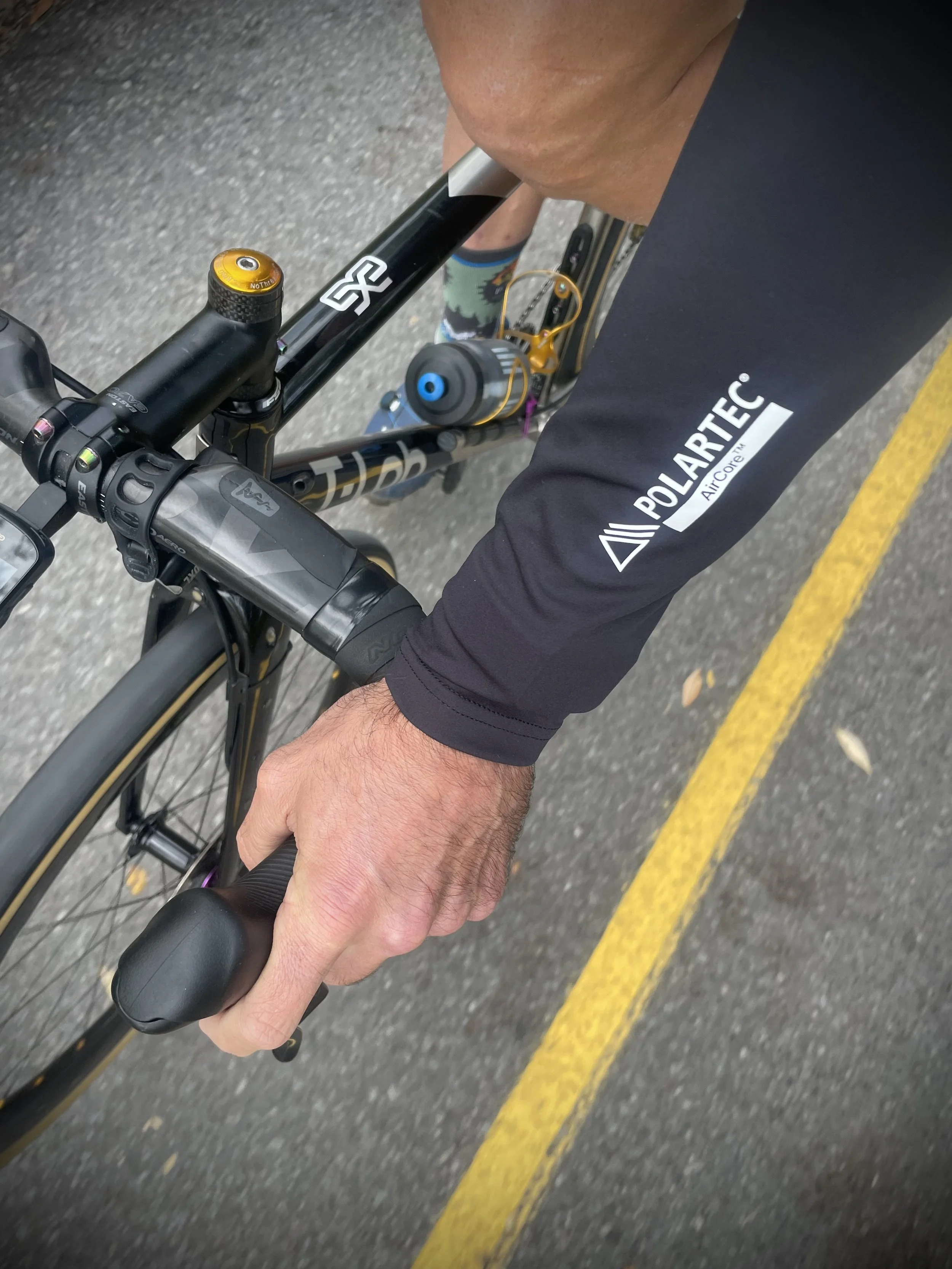
Perfetto RoS 3 at 19C
I tested the RoS 3 on an evening MTB ride that started around 14C, and ended around 8C. The moisture balance was great, and I was thankful for that as I searched for my phone for an hour after it launched out of my jacket pocket (be careful, they are not as constrictive as you might be used to). On the way home, in full dark, I passed through very damp and chilly marsh areas, and I felt zero cold penetration.
The next test was a bikepack mission that would culminate with a ride home from a friend’s housewarming party on Saturday night outside Wakefield, about 50km from Ottawa. Riding out to a camp spot Friday night it was around 9C, and I was absolutely stoked to find my Prosecco full-sleeve base-layer remain dry as we arrived at camp. No urgency to change out of my shirt and jacket before getting cold; perfect! The following day was similar, so I stuck with the RoS 3 setup for the ride to breakfast, then the 100k all-road route that took me to the party. I ended up riding - pretty hard back to Ottawa at 19:30; the party started early. The jacket handled my heat output handily at about 10 C.
I threw the Alpha 150 and Entrata 2 on for a couple post-work rides, both around 5 C, both uneventful. I could feel the same minuscule air penetration on my forearms while in the Alpha 150, which makes sense because Alpha Direct insulation isn’t placed there (see sleeve detail image above). The Entrata 2 places insulation against every AirCore surface, and I suspect this is why I couldn’t feel any air circulating against my skin in that model. I haven’t been anything but comfortable in these jackets so far, and will require a lot more time in both to parse out their specific strengths and weaknesses. My current understanding and expectation is that the Alpha 150 will handle a broader range of intensity for a given set of riding conditions, because the Alpha Direct insulation is capable of capturing a larger volume of vapour than the Entrata 2 (more ‘loft’) and its 150 g membrane should allow for more rapid vapour release and air permeation (read ‘circulation’) than the Entrata 2’s 298 g fabric. Time will tell!
The Evolved Ecosystem
Castelli’s collection of cycling garments comprise an ecosystem; no individual piece performs in isolation. In 2024 Castelli quietly launched a new collection of pieces built with Ristretto fabric, a new approach to managing wind exposure in dry conditions, with a focus on breathability. Now, we have AirCore, which steps Ristretto’s wind protection up to include rain protection. While I don’t have experience in Ristretto pieces as of this writing, it’s clear that Castelli has pivoted away from the Perfetto RoS 2 functioning as the very good do-it-all jacket for wind and rain protection to a breathe-first approach.
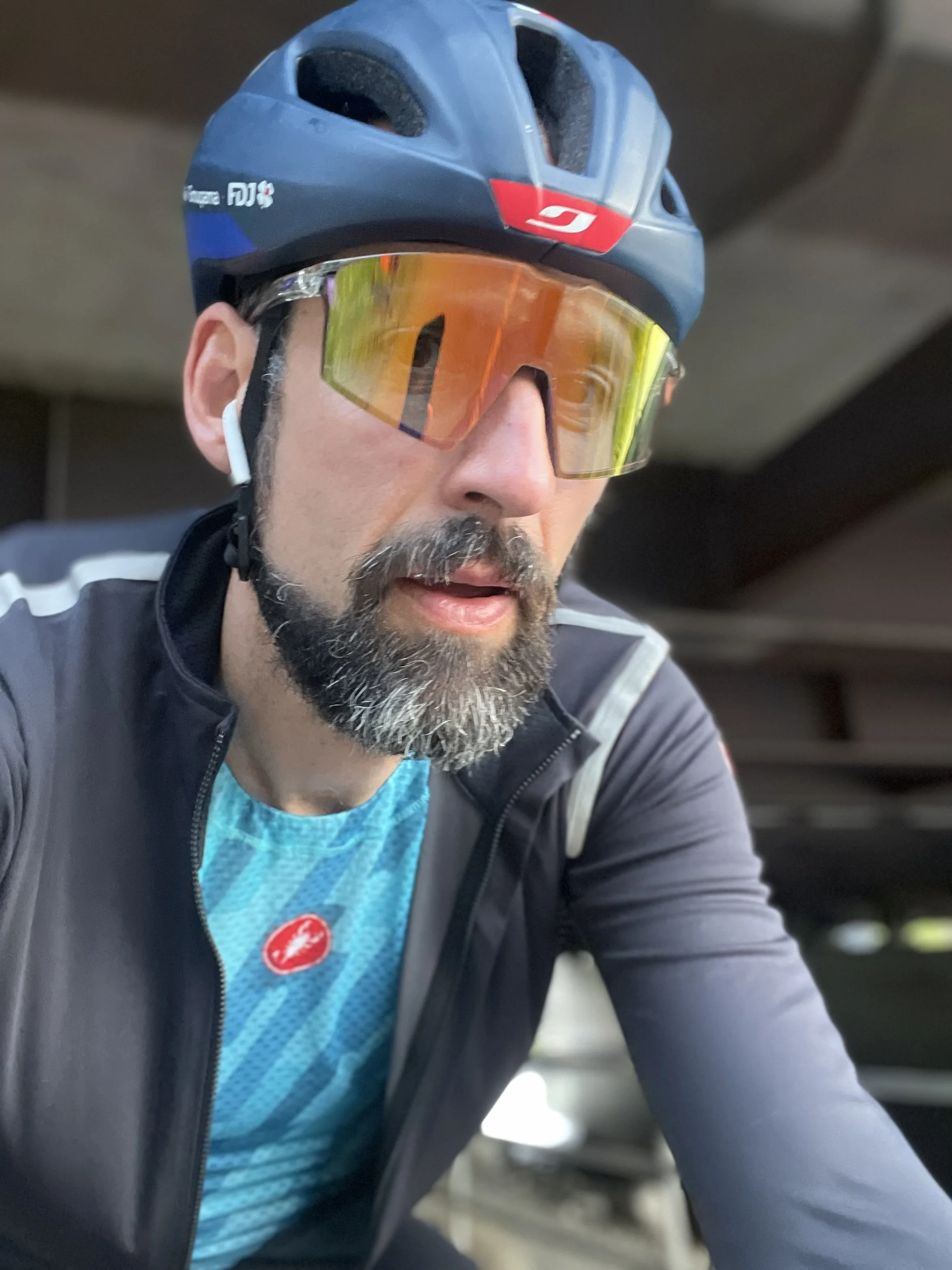
Pro SS (short-sleeve) base layer inside the Perfetto RoS 3 - 19C, warmest use-case.
I’ve used the Perfetto RoS 2 - both standard and convertible - across hundreds of hours of riding and rate them highly. But I’ve often struggled to choose a single jacket for travel and bikepacking, where space is limited. The RoS 2 is bulkier than my Slicker Pro rain shell, yet far more breathable and versatile, especially the convertible, whose zip-off sleeves extend its range. On some mountain descents I’ve even worn both together, because the RoS 2 was still damp from the climb.
That experience confirms a simple truth: protection only matters up to a point.
At 30 C, no one should try to stay ‘dry' inside a jacket; overheating is inevitable. At 20 C in rain, a cyclocross or MTB racer won’t touch one, but a road rider cresting a cold pass will reach for it before the descent.
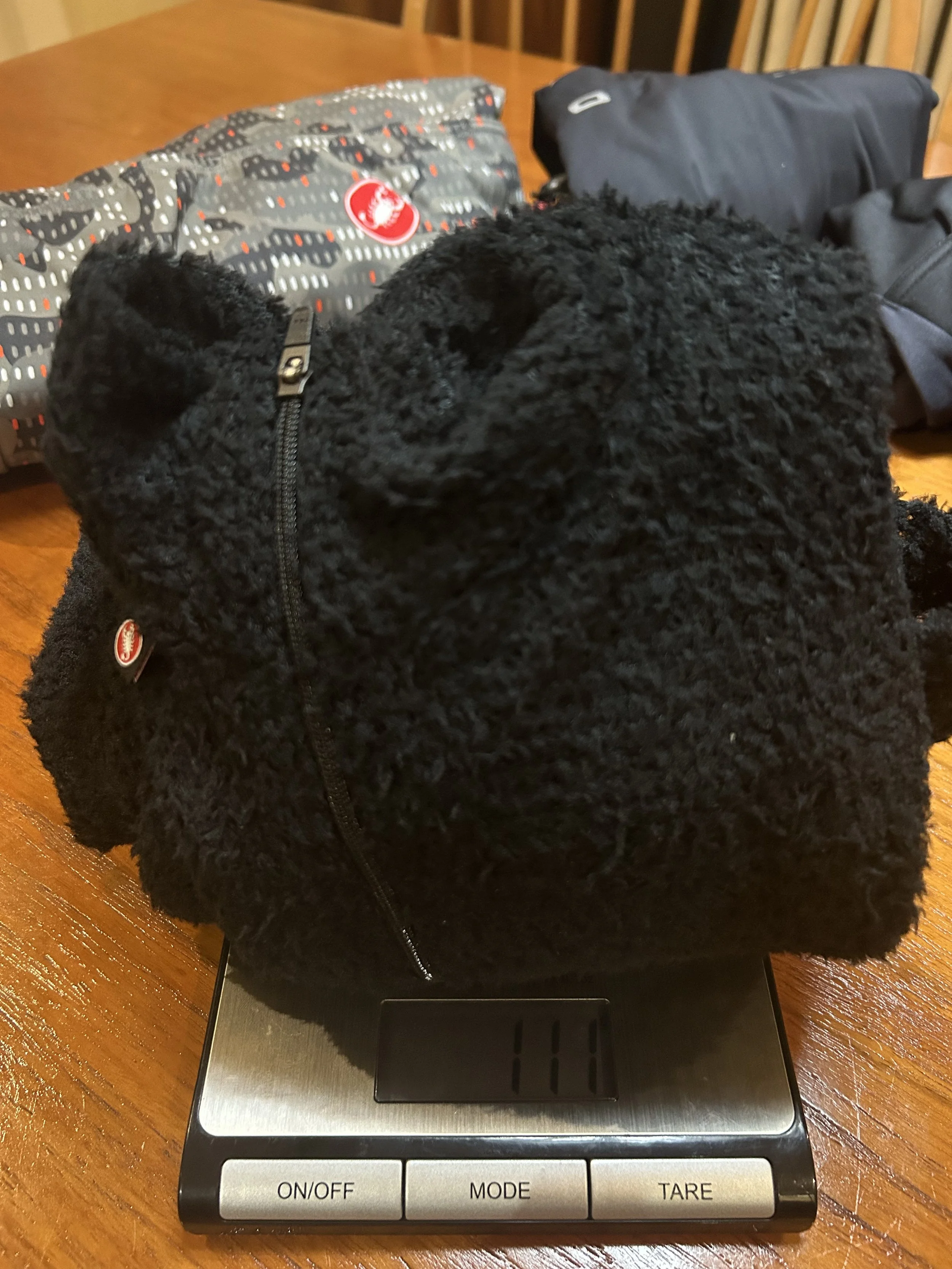
Sneak peak: Cold Days Alpha Direct base layer. Alpha Direct sweaters are all over ultralite backpackers’ game, primarily produced by cottage brands. I’m not aware of any other company making these cut for cycling. And it is a very effective dual-use piece - can be used as part of a sleep system.
I said ‘before the descent’, meaning, the jacket is pulled out of a pocket or mini backpack (a favourite Euro method), donned, then removed again once in the valley. On, off, on, off. That time adds up, btw, and breaks the rhythm of the ride. Some are into that break, others aren’t.
The RoS 3’s AirCore membrane breathes well enough to hold a stable microclimate through moderate efforts up to about 15–20 C, depending on fitness, power output, sweat rate, and humidity (drier air ‘pulls’ vapour more effectively). This means it should be work well to wear the jacket and and down the mountain, which the RoS 2 struggled to do well. Above 20 C, no jacket I know balances wind and water resistance as effectively; the RoS 3 defines the practical upper limit for riding in a shell.
At the cold end, the RoS 3 clears vapour faster than the RoS 2; I expect best-in-class performance for high-intensity winter riding. AirCore’s permeability also pairs better than previous membranes could with Polartec Alpha Direct, an insulation the RoS 2 couldn’t match in breathability. I’ll explore that combination in a future piece.
The RoS 3 brings us as close to ‘one jacket to rule them all’ as we should want, if we accept the breathe-first paradigm. As Steve Smith notes in the podcast linked above, full rain days still call for a dedicated shell or cape. Racers chasing aero efficiency will turn to the Gabba R; those needing a performance over-jersey option can look to the Ultra Rain Cape, while the Squall and Emergency 3 jackets cover the accessible end of the range.
The list below shows how I will create a 4-piece system with the Perfetto RoS 3 as the anchor piece. Over fall/winter 2025-26 I will relate Alpha 150 and Entrata 2 jacket performance against the baseline results I generate with the system below. The layers listed below will also be used with the Alpha 150 and Entrata 2 (bearing in mind it will be odd to use the Cold Days piece with the Alpha 150).
-15C to 0C: Prosecco LS +/- Cold Days
0C to 15C: Prosecco LS or Pro Mesh SS
15C and above: Pro Mesh SS
Conclusion: From Barrier to Balance
When Castelli introduced the Gabba more than a decade ago, it redefined foul weather protection. It blurred the line between jersey and shell and rewrote expectations of comfort in foul weather. In 2025, Gabba has been imitated by many, and mainstreamed within the pro road racing peloton. One might imagine cyclists generally understand the benchmark Gabba established, and I wish that were true, because there would be a lot fewer riders having rough days on bike every year if it were. The fact is most cyclists have yet to define their protection problem, and thus are not looking for a piece like the Gabba. In other words, for the majority of cyclists the Gabba is a ‘solution looking for a problem.’
Castelli is committed to partnering with teams at the highest level or professional racing because racers continue to occupy the pointy end of the demand pyramid for novel and effective solutions for cycling through heinous weather. As long as pro races cross mountain passes, they are going to need phenomenal kit; they must address the problem of outputting massive energy and waste heat on the climbs, and extreme wind-chill on descents at low power and heat output.
The demands of riding in the mountains, from a protection perspective, tend to need to be experienced first-hand to be truly understood. The vast majority of recreational bike riders in the world don’t ride mountains, and still don’t perceive the problem of functional protection. After all, if one can simply choose to stay home instead of pushing it when rain threatens, a jersey and shell jacket will cover a lot of potential ride days. If you don’t need to get somewhere by bike, for whatever reason, pieces like the Gabba and Perfetto present themselves as ‘solutions looking for problems.’
With AirCore, Castelli and Polartec have introduced another novel solution to a (very real) problem that has the potential to go mainstream. The collaboration led by Steve Smith didn’t seek a better version of what already existed, it asked a question no one else in the outdoor industry had posed: What if a membrane could breathe in rhythm with the rider, rather than simply hold the weather at bay?
That question produced AirCore, which manages energy and moisture instead of resisting them. It’s a subtle but profound shift, from garments that shield us from the environment to systems that let us move with it. And this innovation doesn’t strike me as cycling-specific; I expect to see the membrane used for other use-cases as soon as Castelli and Sportful’s exclusive access comes to a close.
The Perfetto RoS 3 sits at the heart of this new energy and moisture management logic. It anchors Castelli’s ecosystem in the same way the Gabba once did, bridging the space between disciplines, intensities, and seasons. AirCore is more than a new fabric, it’s a material expression of Castelli’s next era, built on balance, not barriers.
The Gabba changed how we dress. AirCore will change how we think about protection itself.
Bonus: AirCore Technical Information
AirCore MVTR (Moisture Vapor Transmission Rate): ~ 25,000 g/m²/24 hrs (tested per JIS L1099, B1) for the membrane.
Air permeability: ~ 0.4 to 1 CFM at 125 Pa (ASTM D737)
Water repellency: Minimum “4-spray rating” as-is (per GB/T 4745-2012 or ISO 4920 2012).
Wind protection: Described as “functionally windproof” via the nano-fibre membrane and design.
Materials / construction:
Nano-fibre membrane created via electrospinning.
Recycled face/back fabrics. PFAS-free layers and DWR.
Stretch and movement: Designed for full-range of motion; the membrane + fabric structure allows for comfort during active use.
Environmental/sustainability: Recycled materials, non-PFAS membrane, DWR chemistry aimed at “reduced environmental footprint.”